How to Calculate Cost-Per-Mile for a Trucking Company
9 min read
Your cost-per-mile is the total cost of running your trucks divided by miles they drive. Add what you spent in a month, divide by the miles driven that month, and you have the number. If a fleet spends $100,000 and drives 50,000 miles, its cost per mile is $2.00.

That number tells you the lowest rate you can accept on a load without losing money. It also shows whether your business is getting healthier or slipping, long before a bank balance does.
This guide walks through the calculation step-by-step, using a realistic 20-truck fleet as an example. It also covers two things most guides skip, how different driver pay types change the math, and what empty miles do to your number.
Why cost-per-mile matters more as you grow
With one or two trucks, owners can feel whether a month went well. With 20 or 50 trucks, that feeling does not work. A few loads can look great on paper, while the fleet as a whole loses money on fuel, repairs, and empty runs.
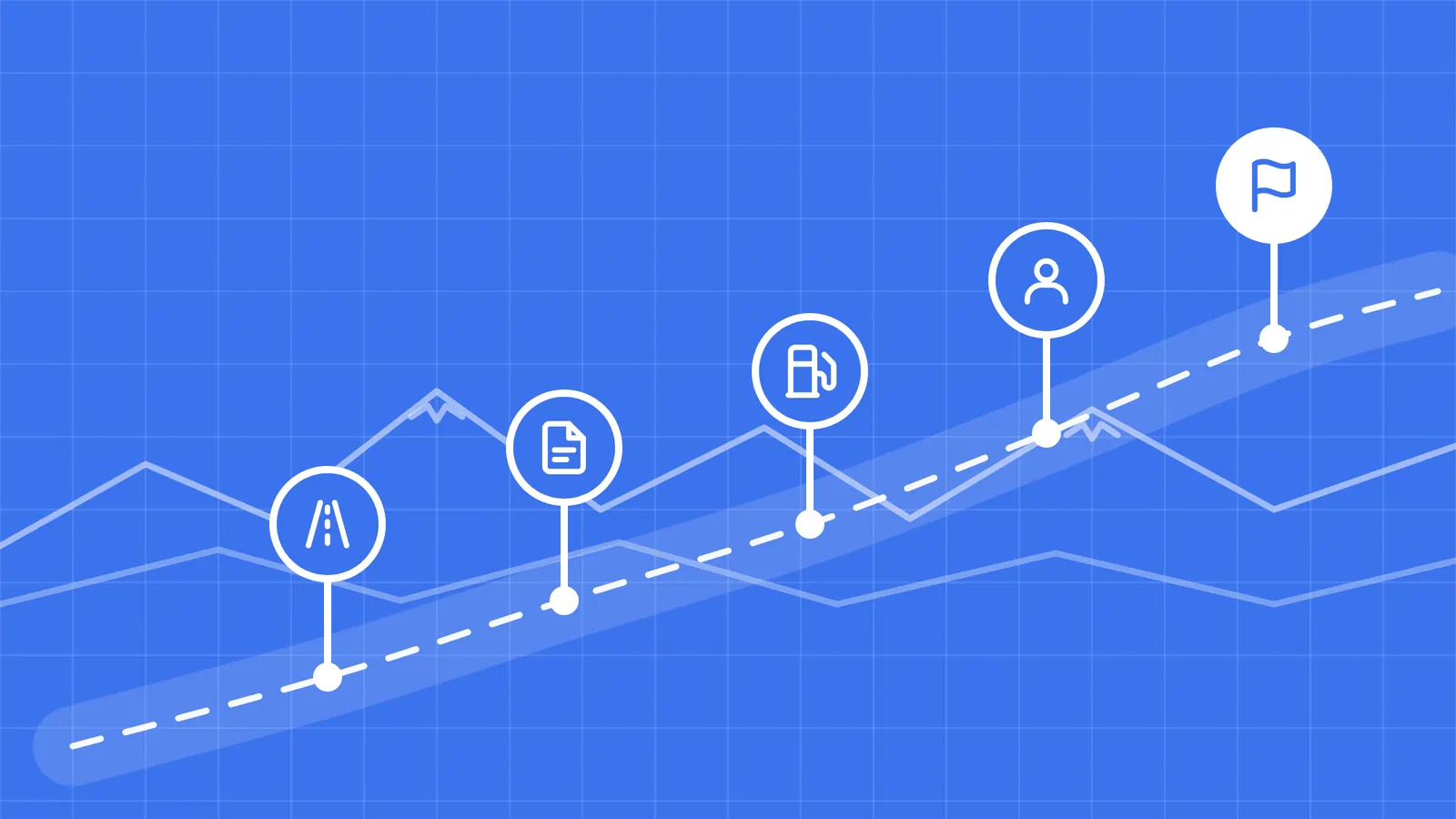
Cost-per-mile gives you a common yardstick for every decision:
- Pricing: Any rate below your cost-per-mile loses money on that load.
- Load selection: You can say yes or no to a load in seconds.
- Trend spotting: If the number rises for three months in a row, something is wrong, even when revenue looks fine.
- Comparing trucks and drivers: A truck with a much higher number than the rest is a question worth asking.
Cost-per-mile formula
The basic formula is short:
Cost-per-mile = Total costs ÷ Total miles
For a fleet with drivers on payroll, it helps to split costs into three groups:
Cost-per-mile = (Fixed costs + Variable costs + Driver costs) ÷ Total miles
Use the same time period for both sides. Monthly is the easiest (most bills arrive that way).
How to calculate cost-per-mile in 5 steps
Step 1: Count your total miles
Start with every mile driven in the period, loaded and empty. You can get this from odometer readings (end-of-month minus start-of-month, per truck), from your ELD data, or from dispatch records.
Also count empty miles. A truck driving to its next pickup burns fuel and wears tires like any other mile.
Step 1: Count your total miles
Fixed costs are the bills you pay whether the truck moves or sits in the yard:
- Truck and trailer payments or leases
- Insurance (liability, cargo, physical damage)
- Permits, licenses, and plates
- Parking and yard costs
- Office, software, and accounting costs
Step 3: Add up variable costs
Variable costs that rise and fall with driving:
- Fuel
- Maintenance, repairs, and tires
- Tolls
- Scales, lumper fees, and other trip costs
Fuel is usually the biggest line here, so get this figure from fuel card statements rather than estimates. To see whether a rise in your fuel cost comes from the market, or from your own trucks, compare it with the weekly diesel prices from the U.S. Energy Information Administration.
Step 4: Add driver costs
Include what each driver costs you in full, not only the paycheck:
- Wages or per-mile pay
- Payroll taxes
- Benefits and workers compensation
Many owners leave this out of their number, and it is often the largest of the three groups. How you calculate it depends on how your drivers are paid, which is covered in the next section.
Step 5: Divide
Add the three groups together and divide by total miles. That is your cost per mile.
Driver pay: how different pay types change the math
Most fleets with 5 to 100 trucks run a mix of drivers, and each type shows up in your numbers differently.
Company drivers
Company drivers are paid directly by you, usually in one of three ways:
- Per mile. The easiest to work with. If you pay $0.60 per mile, your driver cost is $0.60 per mile before taxes and benefits.
- Flat rate. A fixed amount per load or trip. Divide the pay by the miles on that trip to get the per-mile cost.
- Commission. A percentage of the load revenue. The per-mile cost moves with the rate you win, so it changes from load to load.
Here is the same 700-mile trip under each type:
| Pay type | How it is paid | Driver pay | Driver cost per mile |
|---|---|---|---|
| Per Mile | $0.60 per mile | $420 | $0.60 |
| Flat Rate | $600 per trip | $600 | $0.86 |
| Commission | 25% of a $2,400 load | $600 | $0.86 |
| Commission | 25% of a $2,000 load | $500 | $0.71 |
The last two rows show why the commission needs extra attention. Same driver, same trip, different rate, different cost-per-mile.
Owner-operator trucks
When a driver owns the truck, you usually pay a share of the revenue, with adjustments such as fuel. Treat that share as both a truck cost and driver cost for those miles, not as a separate line on top of your fixed costs. Otherwise you count the truck twice.
Third-party drivers
Some drivers work under your rules, but their own company pays them. In that case you calculate their pay, but you do not pay it.
Keep your numbers consistent. If you do not pay those drivers, leave their miles out of your total miles as well. Otherwise your cost per mile will look better than it really is.
Cost-per-mile example: 20-truck fleet
Here is one month for a fleet of 20 trucks. The figures are illustrative.
Total miles: 180,000 (about 9,000 per truck)
| Cost group | What is included | Monthly cost | Per mile |
|---|---|---|---|
| Fixed | Truck and trailer payments, insurance, permits, yard, office | $78,000 | $0.43 |
| Variable | Fuel, maintenance and tires, tolls, other trip costs | $146,000 | $0.81 |
| Driver | Wages, payroll taxes, benefits | $162,500 | $0.90 |
| Total | $386,500 | $2.15 |
$386,500 ÷ 180,000 miles = $2.15 per mile.
This fleet needs to earn at least $2.15 for every mile it drives just to break even. Anything above that is profit.
Deadhead miles: the cost that changes your answer
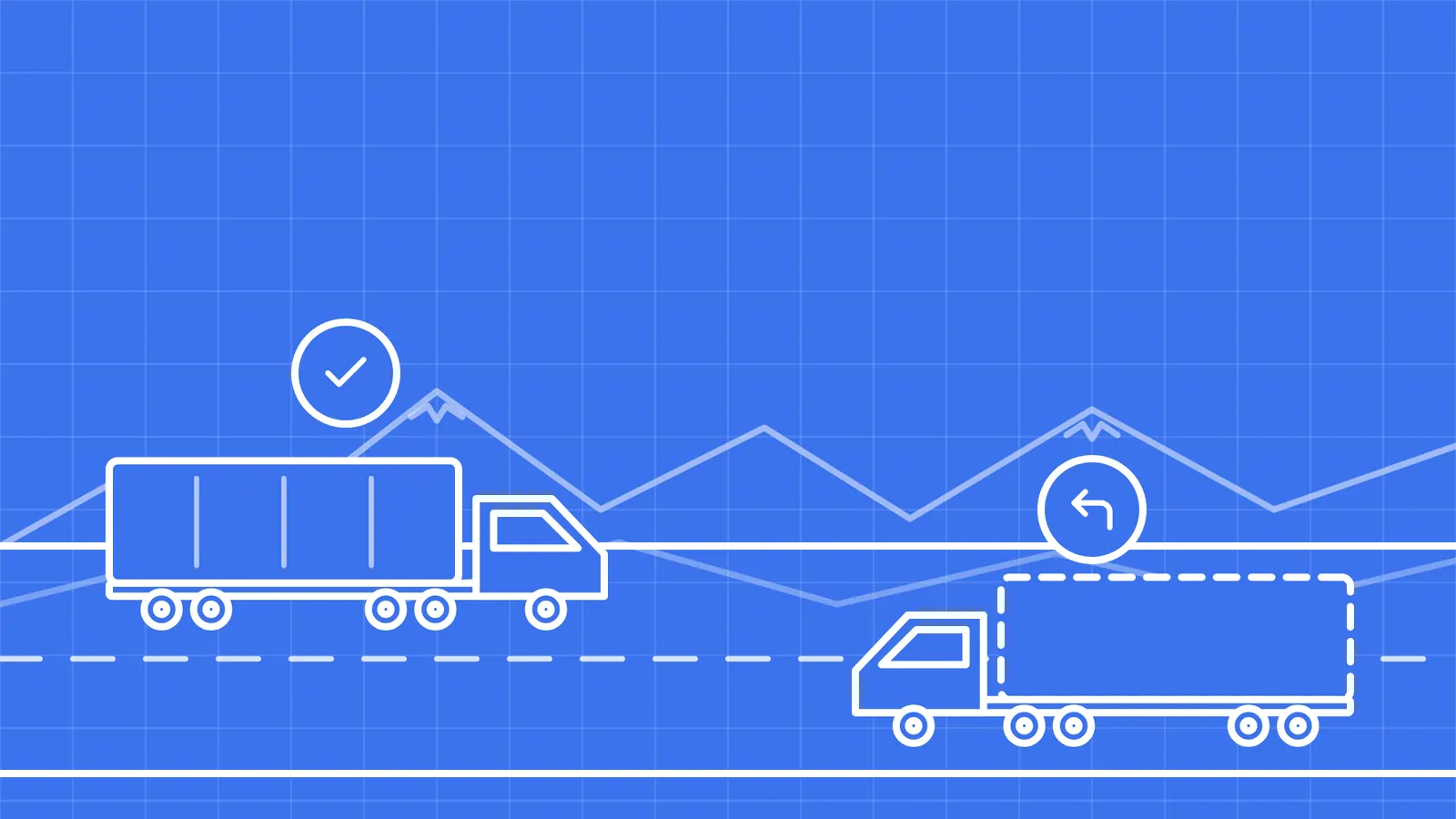
Here is the catch. In the example above, not all 180,000 miles were paid. Say 15% were deadhead miles, meaning the truck drove empty to its next load. That is 27,000 empty miles and 153,000 loaded miles.
Brokers and shippers pay only for loaded miles. So the rate you need to charge is:
$386,500 ÷ 153,000 loaded miles = $2.53 per loaded mile.
This is 38 cents more than the $2.15 headline number. A fleet that quotes loads against $2.15 will lose money on every one of them.
This is common. The American Transportation Research Institute (ATRI) found that empty miles averaged 16.7 percent of all miles in 2024. That is about one mile in six. The share changes from year to year, so look up the latest figure on the ATRI website.
Track both numbers:
- Cost per total mile shows how efficiently the fleet runs.
- Cost per loaded mile shows what you must charge.
Fixed vs variable costs: what to include
If you are unsure where an expense belongs, this table helps.
| Cost | Group | Notes |
|---|---|---|
| Truck and trailer payment | Fixed | Include lease payments too |
| Insurance | Fixed | Divide annual premiums by 12 |
| Permits, licenses, plates | Fixed | Spread annual fees across months |
| Yard, parking, office | Fixed | Include software subscriptions |
| Fuel | Variable | Use fuel card totals |
| Maintenance, tires | Variable | Include scheduled and surprise repairs |
| Tolls | Variable | Often recoverable from the customer, so track them separately |
| Driver pay | Variable | Include taxes and benefits |
Two common mistakes: counting the same cost twice, and forgetting annual bills that land in one month. Spread those across the year so one month does not look unusually bad.
What is the average cost-per-mile in trucking?
The best-known benchmark comes from ATRI's yearly Operational Costs of Trucking report. For 2025, it put the industry average at $2.336 per mile, up 3.4% from $2.260 in 2024. It is the highest figure in the history of the report. Without fuel, the average was $1.854 per mile.
Driver pay is the biggest piece. Wages and benefits together came to about $1.03 per mile, and repairs and maintenance added about 40 cents. Tolls and tires rose fastest, by 13.2% and 6.4%.
These figures change every year, so check the latest numbers on the American Transportation Research Institute website before you rely on them.
Use these figures as a reference point, not a target. Your number depends on your freight, your region, your equipment age, and how much you pay drivers. A fleet running short regional routes will look different from one running long-haul reefer lanes.
If your number sits well above the average, look at fuel, deadhead, and driver turnover first. If it sits well below, check that you have not left out a cost.
How to lower your cost-per-mile
You do not need to cut everything. A few areas move the number the most.
Optimize routes
Shorter, smarter routes and load plans save fuel, driver hours, and wear. Even a small improvement repeats on every truck, everyday.
Cut deadhead miles
Plan the next load before the current one ends. Group lanes, build return freight into pricing, and watch which trucks run empty most often. Each 1% less deadhead on a 180,000-mile month is 1,800 more paid miles.
Watch fuel and driver behavior
Idling, speeding, and hard braking burn fuel. Fleet telematics can show these by driver, so you can share the results. Many fleets see gains from simply making the numbers visible.
Plan maintenance
A planned repair costs less than a roadside breakdown. Scheduled service also avoids the lost days that come with unplanned downtime.
Calculating cost-per-mile for a fleet, not just one truck
For one truck, a single fleet-wide number is enough. With 20, 50, or 100 trucks, an average hides the story. Two trucks can both look fine on average while one runs well below the fleet cost and another far above it.
Once the fleet-wide number is solid, break it down:
- Per truck: Spot the vehicles that cost the most to run.
- Per driver: Compare fuel use and deadhead share across drivers.
- Per lane or route: Find lanes that look busy but earn little.
- Per customer: See which customers are worth keeping at their current rates.
Doing this by hand can get slow quickly. Most fleets that grow past a handful of trucks move from a spreadsheet to trucking dispatch and management software that collects fuel, repairs, driver pay, and trips in one place.
Frequently Asked Questions
What is a good cost per mile for trucking?
There is no single good number. A good cost per mile is one that sits comfortably below the rates you earn. Compare yourself to the industry average, then compare yourself to your own past months.
How do you calculate cost-per-mile for a trucking company?
Add all fixed, variable, and driver costs for a period, then divide by the total miles driven in that same period.
Should I include deadhead miles?
Yes. Empty miles cost the same to drive as loaded ones. Include them in your total miles, and also calculate cost per loaded mile, because that is the figure you need to charge.
How do I include driver pay when drivers are paid-per-mile, per load, or by commission?
Convert each to a cost-per-mile: Per-mile pay is already one, flat-rate pay is divided by the trip miles, and commission is the percentage of the load revenue divided by the trip miles. Then add payroll taxes and benefits.
How often should I recalculate cost per mile?
Monthly at a minimum. Recalculate sooner when fuel prices, insurance, or driver pay change noticeably.
What is the average cost per mile for trucking?
ATRI reported $2.336 per mile for 2025, up from $2.260 in 2024. This figure is updated yearly, so check the American Transportation Research Institute website for the latest. Your own number will vary with freight type, region, and equipment.
Know your number
Cost-per-mile is not a complicated calculation. The hard part is keeping the inputs accurate and up to date as the fleet grows. Start with the five steps above, include your deadhead miles, and check the number every month. Once you know what each mile costs you, you can price loads, pick freight, and spot problems with confidence.